
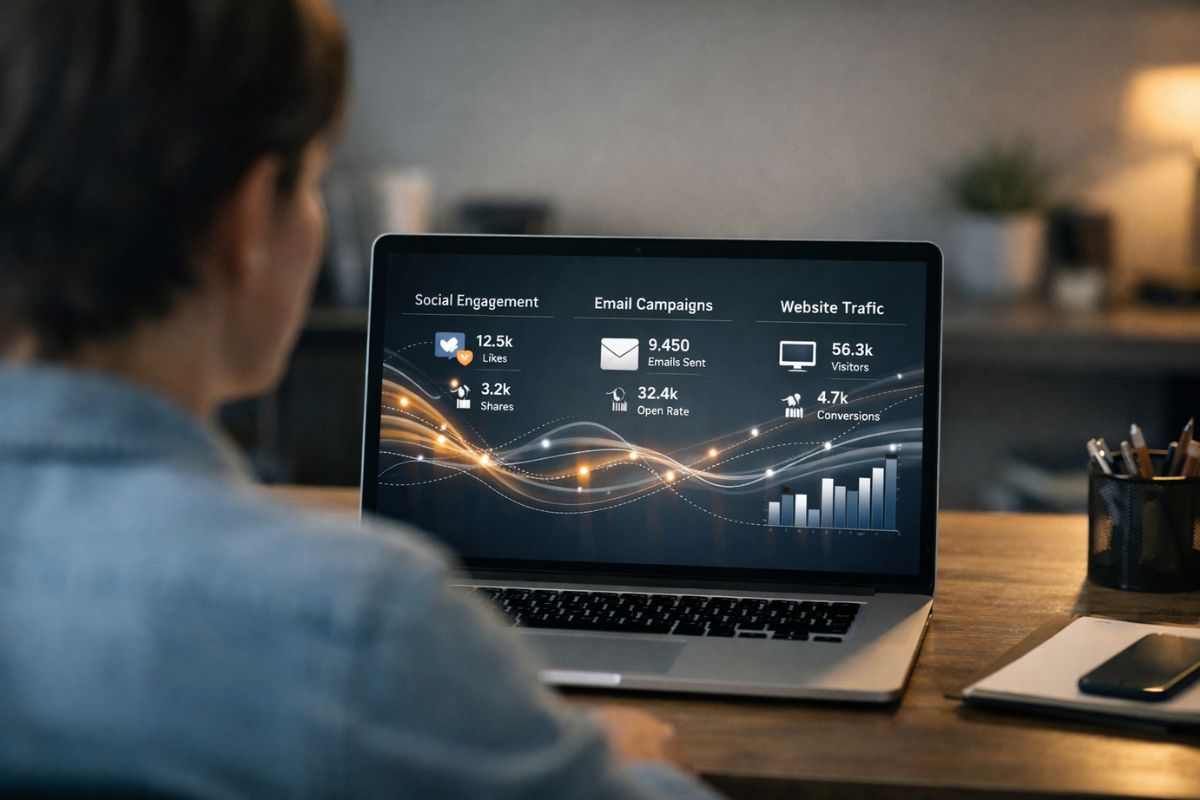
Small business marketing in North America is entering a decisive phase. What once rewarded scale, budget, and long planning cycles is now being reshaped by speed, relevance, and execution. In 2026, the competitive edge will not belong to the biggest brands or the loudest advertisers, but to those who can adapt in real time.
Across Canada and the United States, small and medium sized businesses are rethinking how marketing fits into daily operations. Recent industry data indicates that roughly one in three U.S. business owners plans to rebuild their social media strategy from the ground up in 2026. This is not a refresh or a seasonal campaign. It is a structural reset.
The reason is simple. Marketing channels, especially social platforms, are no longer passive distribution tools. They have become performance engines that respond to timing, context, and customer behavior as it happens.
For businesses willing to move faster than their competitors, this shift creates opportunity. For those who cannot, it creates risk.
From Campaigns to Continuous Performance
For much of the past decade, marketing followed a predictable rhythm. Businesses planned quarterly campaigns, scheduled posts weeks in advance, and reviewed results after the fact. That model is losing relevance.
In 2026, social media functions as a live environment. Content performance is visible within hours. Messaging can be adjusted daily. Customer feedback is immediate and public.
This change favors businesses that treat marketing as an operational capability rather than a periodic activity. A post reacting to a local event, a sudden weather change, or a customer question can now drive measurable outcomes the same day. Website visits, inbound calls, and bookings increasingly originate from moments, not months.
Speed matters more than polish. A timely, relevant message will often outperform a perfectly produced one that arrives too late.
This evolution is especially significant for small businesses in dense local markets, where competition is high and customer attention is limited. In these environments, responsiveness becomes a form of differentiation.
Social Media as a Real Time Business Channel
Social platforms are no longer secondary to search engines or websites. For many customers, they are the first point of discovery.
In 2026, consumers search for services, recommendations, and answers directly on social networks. They evaluate businesses based on recent activity, tone, and responsiveness. An inactive or outdated presence signals risk. An active, adaptive one builds confidence.
This has changed how performance is measured. Success is no longer defined by follower counts or impressions alone. It is defined by outcomes such as inquiries, appointments, and conversions.
Small businesses that monitor engagement patterns and adjust content quickly are seeing stronger returns than those relying on static schedules. The ability to publish, test, learn, and refine in short cycles has become a core marketing skill.
AI as Infrastructure, Not Experimentation
Artificial intelligence is no longer optional in small business marketing. In 2026, it functions as infrastructure.
AI tools now assist with content drafting, performance analysis, audience segmentation, and workflow automation. What once required a team now requires a system.
The most effective businesses are not those that use AI visibly, but those that use it quietly and strategically. AI handles repetition and analysis. Humans focus on judgment, tone, and relationships.
This balance matters. Small businesses depend on trust. Automation without authenticity undermines credibility. When used correctly, AI amplifies human insight rather than replacing it.
For marketing teams with limited capacity, AI reduces friction. It shortens production cycles, improves consistency, and enables real time decision making without increasing headcount.
Email Marketing Evolves Through Integration
Despite ongoing predictions of its decline, email remains one of the most reliable marketing assets for small businesses. Its role, however, has changed.
In 2026, email is no longer an isolated channel. It operates as part of an integrated system that connects social activity, customer behavior, and automated workflows.
Social platforms generate awareness and engagement. Email deepens relationships and drives repeat action. When these channels work together, performance improves.
The emphasis is no longer on volume. It is on relevance. Timely follow ups triggered by customer interaction outperform generic newsletters sent on fixed schedules.
For businesses operating across Canada and the United States, this integration has become a baseline expectation. Customers assume continuity across touchpoints. Marketing systems that deliver it gain an advantage.
Value, Clarity, and Customer Confidence
Economic conditions continue to influence buying behavior. Customers are more selective. They compare options and seek reassurance before committing.
In this environment, marketing must do more than attract attention. It must communicate value clearly.
In 2026, successful small businesses articulate what makes them reliable, efficient, and worth choosing. Promotions and loyalty programs matter, but so does transparency around service quality and expectations.
Marketing performance is increasingly tied to outcomes. Social posts, email campaigns, and website updates are evaluated based on their ability to generate tangible results. Visibility without conversion is no longer sufficient.
This shift has prompted many businesses to rethink how they measure success. Metrics that connect directly to revenue and customer retention now carry more weight than vanity indicators.
Content Built for Search and Discovery
The boundary between search and social continues to blur. Customers discover businesses through short videos, practical tips, and direct answers to questions.
In response, content strategies are changing. Generic promotional messaging is giving way to problem solving formats. Businesses that explain, guide, and educate attract attention organically.
This approach requires a deeper understanding of audience needs. Content is created with intent, not obligation. Each piece serves a purpose.
For small businesses, discoverable content offers one of the most cost effective growth paths available. When content aligns with how customers search and browse, it compounds over time.
When Strategy Meets Capacity Constraints
While the strategic direction is clear, execution remains a challenge. Many business owners recognize the importance of speed and adaptability but lack the internal resources to sustain it.
This gap has increased demand for partners that help small teams operate at a higher tempo without increasing overhead. Digital marketing agencies are evolving to meet this need by focusing on systems, not just content.
One example is Digital Sense, a digital marketing firm working with businesses across North America. By lowering barriers to entry and emphasizing performance driven execution, providers like Digital Sense help businesses test modern strategies before committing significant budget. Their approach reflects a broader industry trend toward agility and measurable impact. Learn more about modern digital marketing systems at Digital Sense.
Trial based models and modular services are becoming more common as business owners seek proof before scale.
Looking Forward: Speed as a Strategic Advantage
The defining question for small business marketing in 2026 is not who has the largest audience, but who can respond the fastest.
Speed influences relevance. Relevance drives trust. Trust converts attention into action.
For businesses that embrace this shift, marketing becomes a real time growth engine rather than a fixed expense. Those that delay may find themselves outpaced by smaller, faster competitors.
The opportunity is clear. The challenge is execution. In 2026, speed will not just outperform size. It will redefine what effective small business marketing looks like.
